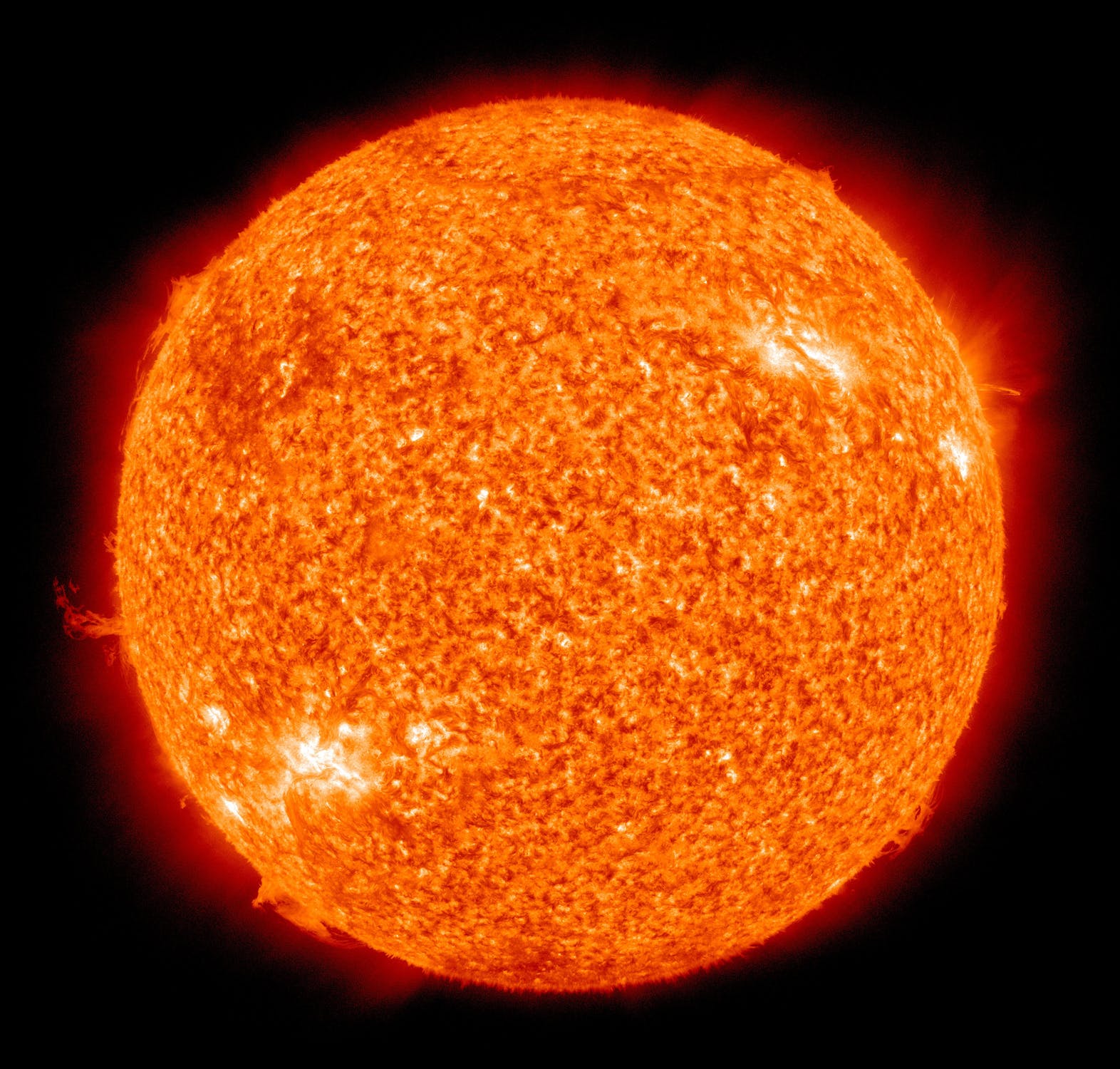
The Sun's activity is defying forecasts and highlighting how difficult it is to predict the machinations of Earth's nearest star.
Why it matters: Space weather, which is largely driven by the Sun, can shorten the lifespans of satellites, cause radio blackouts and, in extreme solar storms, bring down power grids.
. . .
- Sunspots — dark areas on the face of the Sun — can spit out major solar flares that sometimes come with coronal mass ejections (CMEs), bursts of electrically charged plasma that can interfere with satellites, electrical grids and supercharge the auroras.
- If coronal holes — cooler spots in the Sun's atmosphere — rotate into the view of Earth, they can send extremely fast solar winds into our part of space, warping Earth's magnetic fields in the process.
Yes, but: The Sun is extremely complicated and even after decades of study, researchers don't understand exactly how it works.